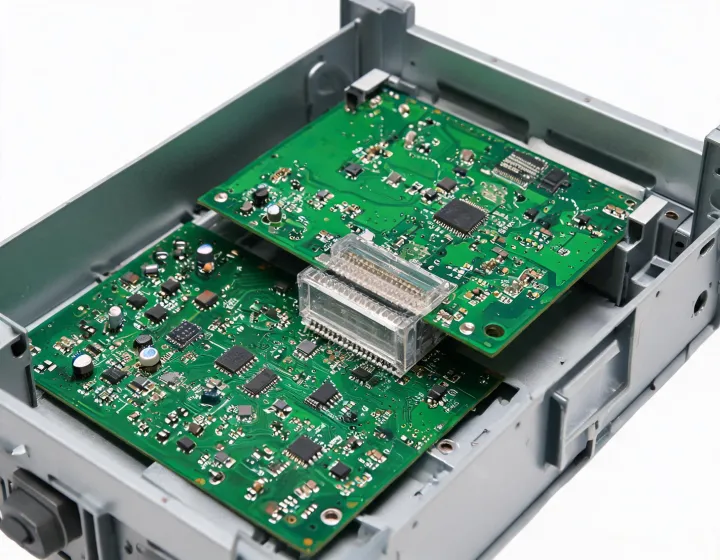
Translate the project into purchase fields
Switch and line-card hosts
Record contact count, differential impedance near 100 ohm, and the stack height that clears the next card. Data rate is a host question: ask which insertion loss and return loss the supplier measured, and at what frequency. Do not copy a port-speed slogan onto the connector line.
Radio and timing hosts
Ask for impedance, frequency range, and VSWR on the exact launch geometry. A 50 ohm label without a plot leaves the RF path open. Power rating on a bias pin is a separate row from the RF row, with its own current and voltage.
Outdoor and industrial hosts
Environment is temperature, shock, and ingress protection of the mated pair, not the cabinet alone. A housing marked IP67 still needs the supplier test method. Connector mating cycle life matters if the card is pulled during field service. Calibration traceability matters if you will repeat a loss measurement later.
Selection disagreement: coded module versus second-source header
When the connector feeds a host that also uses coded optics or coded line modules, one camp stays with the original drawing so vendor support policy is easier to discuss. The other camp treats a compatible footprint as acceptable after the exact host, plating, and pinout are checked. LinkScope Sourcing 39 can request both packs of documents. A matching marketing name is not the check.
Selection disagreement: new connector lots versus refurbished assemblies
New connectors may carry a clearer date code and a full cycle rating. Refurbished or surplus assemblies may be the practical path for a legacy pitch, provided condition, plating wear, and remaining cycles are written down. The disagreement is about lifecycle evidence, not about a universal ranking. This page does not assign either side a win.
Illustration of a site constraint, not a shipped project
A shelter builder expects cards to be swapped twice a year for five years, which is about 10 mating cycles plus extra handling, so they ask for a rating of at least 100 cycles with margin. The process is to request the method, the sample size, and whether the rating is a minimum. The result they should accept is a document tied to the part number. If the factory only says durable, the line stays open. No field failure rate is invented from that gap.
Key specs to request, using supplier units rather than a house standard: data rate context, mechanical reach as stack height in millimetres, contact count, power rating as current and voltage, frequency range, connector family, environment, and the accuracy statement on any loss figure. Version history of the drawing, if the supplier has one, belongs in the file name.
Limits: this desk does not measure optical budget or wavelength, because those belong to optical modules, not to a passive mezzanine body. It also does not set a port count for the switch. If your brief mixes a connector line with an optic line, keep them in separate rows so a board to board connector manufacturer is not asked to warrant a transceiver.